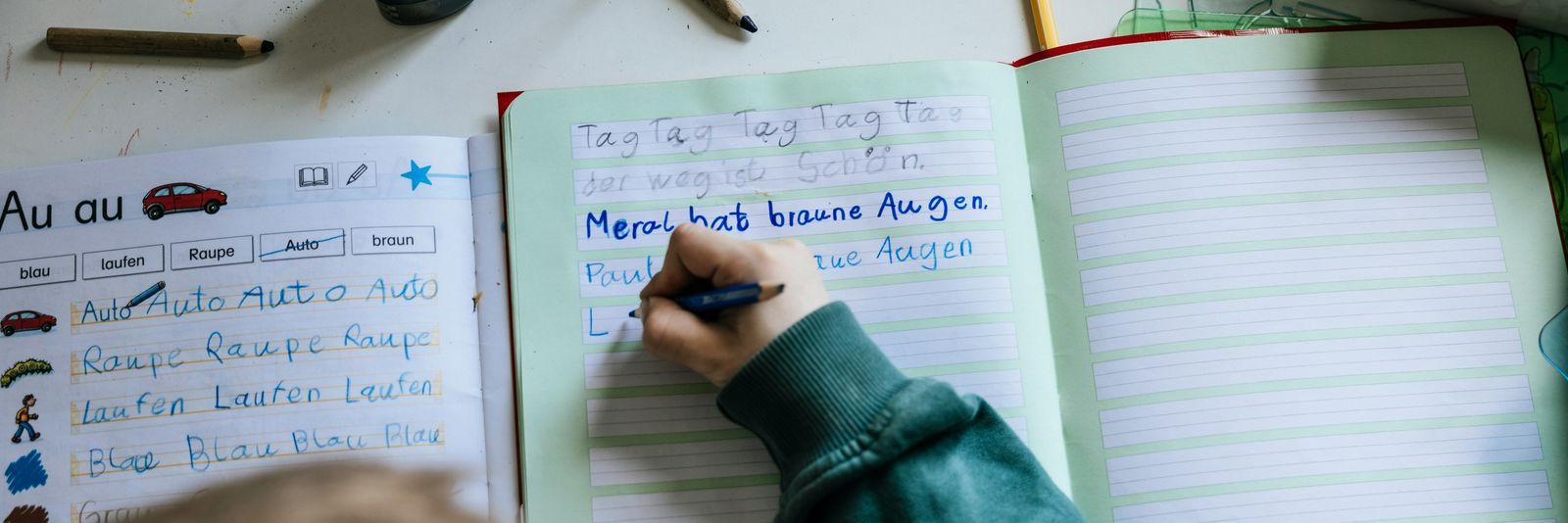
A number story is a word problem. The difficulty is almost never the calculation. It is working out which calculation the story wants, and that is a skill you can practise on its own.
Four steps
- Find the question. Read the last sentence first if you like. What exactly is being asked for?
- Find the numbers that matter. Some stories include numbers that have nothing to do with the question.
- Decide the operation. Ask what is happening to the quantities, not which keyword appeared.
- Check against the story. Not just the arithmetic. Does the size and the unit make sense?
Deciding the operation
| The story | Operation | Example |
|---|---|---|
| Putting amounts together | Addition | Two bags are combined |
| Taking some away, or comparing two amounts | Subtraction | How many more does Ana have than Beto |
| Equal groups joined | Multiplication | Six boxes with eight pencils in each |
| Sharing equally, or measuring how many groups fit | Division | Forty two seats in rows of seven |
Why keywords are unreliable
Children are often taught that altogether means add and left means subtract. Then they meet a story like this one.
Mira has 24 stickers altogether. She has 9 more than Sam. How many does Sam have?
The word altogether is there, and the answer is a subtraction: 24 - 9 = 15. Ask what is happening, not which word appeared.
Numbers that do not matter
A shop opens at 8 in the morning. It sells 36 loaves before noon and 27 in the afternoon. How many loaves did it sell that day?
The 8 is a time, not a count of loaves. The answer is 36 + 27 = 63.
Checking against the story
An answer of 63 loaves is sensible. An answer of 63 shops is not, and neither is an answer larger than a total the story already gave. Reading the answer back into the sentence catches most mistakes, including the ones where the arithmetic was perfect.
Check yourself
A class of 28 children sits in rows of 4. How many rows?
Division, because equal groups are being measured out: 28 / 4 = 7 rows.
Leo read 47 pages. Nina read 62. How many more did Nina read?
Subtraction, comparing two amounts: 62 - 47 = 15 pages.
Five crates hold 12 apples each. Three apples are bruised. How many apples in total?
5 x 12 = 60. The three bruised apples are not asked about, so they are not part of the answer.
Why is reading the last sentence first a useful habit?
Because it tells you what to look for while you read the rest. Without the question in mind, everything in the story looks equally important.
See also
Sources
- Word problem strategy as taught in United States elementary mathematics. Story examples on this page are our own.