This site explains how arithmetic methods actually work and what the main science topics of upper elementary school mean. It is written for a student who is stuck on homework, a parent who learned a different method at school, and a teacher who wants a second explanation to hand out.
Start with a method
These are the pages people arrive at most often, usually because a child came home using a method their parents were never taught.
 Fourth grade · Mathematics
Partial-differences subtraction
A subtraction method that never borrows. You subtract each place value separately, allow the answers to...
 Third grade · Mathematics
Trade-first subtraction
The borrowing algorithm, split into two clean stages: trade everything that needs trading first, then...
 Fourth grade · Mathematics
Counting-up subtraction
Instead of taking away, you start at the smaller number and count up to the larger one. The jumps you...
 Fourth grade · Mathematics
Partial-products multiplication
Split both numbers into place values, multiply every part by every part, and add the products. The area...
 Third grade · Mathematics
Lattice multiplication
A grid method where every square holds one single-digit product. The diagonals do the place-value work...
 Fifth grade · Mathematics
Partial-quotients division
Also called the friendly-numbers method. You subtract easy multiples of the divisor as many times as...
Or a science topic
 Fourth grade · Science
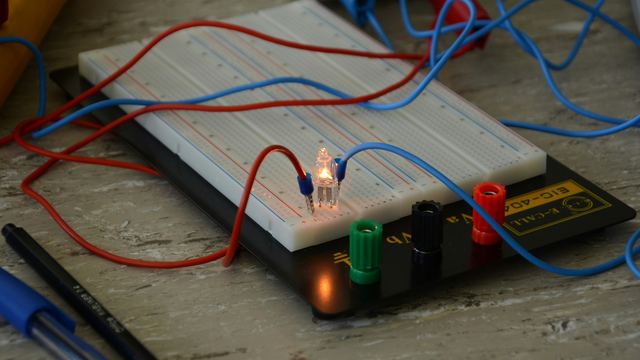
Electric current and simple circuits
A current is charge on the move, and it only moves when the path it travels is unbroken. Everything...
 Fifth grade · Science
Weather: air masses, fronts and instruments
Weather is what the atmosphere is doing now. Almost all of it starts with the same fact: the sun does...
 Fifth grade · Science
Astronomy: the earth, moon and sun
Rotation gives day and night. Tilt gives the seasons. Almost every mistake in this topic comes from...
Latest notes
 For parents · 18 August 2026
Why your child's subtraction looks nothing like yours
Three unfamiliar methods, one familiar answer. The disagreement at the kitchen table is usually about...
 Site news · 18 August 2026
This site is back online after ten years
The addresses that people cited for twenty years now resolve to real explanations again.
 Site news · 18 August 2026
Ten quizzes, and why the wrong answers are chosen carefully
A distractor that matches a real error teaches something. A random one just wastes a guess.
Check what you know
Ten quizzes, one question at a time, with the answer and the reasoning straight after each one. If you are not signed in, which is how most people use the site, scores stay in your own browser and a button on that page erases them.
Every page is built the same way
A reader who is stuck needs to find one particular thing quickly, so the shape never changes. First a short explanation of how the method works. Then a full worked example with nothing skipped. Then why it works, which is the part textbooks tend to leave out. Then the mistakes that produce a wrong answer, described specifically enough to recognise your own. Then questions whose answers stay hidden until you ask for them.
No account is needed to read anything here or to take any quiz, and children are not offered one at all. There is no timer running and no score is reported to a teacher, which means a student can be wrong in private. Teachers and parents can create an optional account to connect with each other; if they do, quizzes they finish while signed in appear on their own activity page.
About this site
Our Online Schools was published from 2003 as a small non-profit assessment library for grades 3 to 8. It went offline for several years. In 2026 the pages were rewritten from scratch by the current editors and the site was put back online at its original addresses, so that links pointing here from encyclopedias, reading lists and school pages resolve to real explanations again.
The current editors are not connected to the original foundation. Everything you read here was written in 2026. More about the site and its history.