
These pages explain the written methods used in elementary arithmetic: what the steps are, why they work, and where they usually go wrong. Each one carries a full worked example.
Third grade
 Third grade · Mathematics
Lattice multiplication
A grid method where every square holds one single-digit product. The diagonals do the place-value work...
 Third grade · Mathematics
Lines of symmetry
Fold the shape along the line. If the two halves land exactly on top of each other, the line is a line...
 Third grade · Mathematics
Partial-sums addition
Add the hundreds, add the tens, add the ones, then add those three answers. Nothing is carried at any...
 Third grade · Mathematics
Solving number stories
The arithmetic in a word problem is rarely the hard part. Deciding which operation the story is asking...
 Third grade · Mathematics
Tenths and hundredths
The places after the point continue the same pattern as the places before it. Each step to the right is...
 Third grade · Mathematics
Trade-first subtraction
The borrowing algorithm, split into two clean stages: trade everything that needs trading first, then...
Fourth grade
 Fourth grade · Mathematics
Angles
An angle measures turn, not length. Two angles drawn with very different arm lengths can be exactly the...
 Fourth grade · Mathematics
Comparing and ordering decimals
Comparing decimals goes wrong when students compare them as if they were whole numbers. Lining up the...
 Fourth grade · Mathematics
Counting-up subtraction
Instead of taking away, you start at the smaller number and count up to the larger one. The jumps you...
 Fourth grade · Mathematics
Dividing by 10, 100 and 1,000
The mirror image of multiplying by ten. Digits move right, and the ones that fall past the point become...
 Fourth grade · Mathematics
Geometric solids
Count faces, edges and vertices carefully once and a pattern appears that holds for every solid with...
 Fourth grade · Mathematics
Multiplying by 10, 100 and 1,000
The digits move, and a zero appears to fill the gap. Teaching it as add a zero works until decimals...
 Fourth grade · Mathematics
Partial-differences subtraction
A subtraction method that never borrows. You subtract each place value separately, allow the answers to...
 Fourth grade · Mathematics
Partial-products multiplication
Split both numbers into place values, multiply every part by every part, and add the products. The area...
 Fourth grade · Mathematics
Polygons
A closed shape made only of straight sides. Everything else about polygons follows from counting those...
 Fourth grade · Mathematics
Quadrilaterals
Six names, one family tree. The confusing part is that the categories overlap on purpose.
 Fourth grade · Mathematics
Reading and writing big numbers
Large numbers are not harder than small ones. They are the same three-digit pattern repeated, with a...
 Fourth grade · Mathematics
Triangles
Every triangle has two names: one for its sides, one for its angles. Knowing one tells you very little...
Fifth grade
 Fifth grade · Mathematics
Area
Area counts how many unit squares cover a surface. Every area formula later on is a shortcut for that...
 Fifth grade · Mathematics
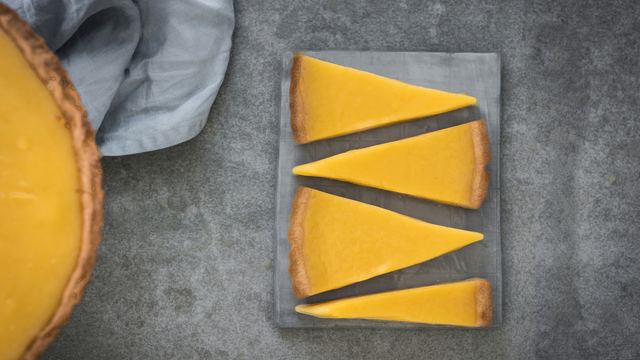
Estimating multiplication
Three ways to estimate a product, and a way to know before you calculate whether your estimate is too...
 Fifth grade · Mathematics
Fractions, decimals and percents
Three ways of writing the same quantity. Once the conversions in both directions are automatic, a lot...
 Fifth grade · Mathematics
Magnitude estimates
Not what the answer is, but how big it is. A magnitude estimate is the cheapest way to catch an answer...
 Fifth grade · Mathematics
Mental division
Three habits that make division doable without paper: split the dividend, halve twice instead of...
 Fifth grade · Mathematics
Partial-quotients division
Also called the friendly-numbers method. You subtract easy multiples of the divisor as many times as...
 Fifth grade · Mathematics
Rounding numbers
Find the place you are rounding to, look at the one digit on its right, and decide. Everything after...
 Fifth grade · Mathematics
Volume
Volume counts unit cubes the way area counts unit squares. Thinking of it as stacked layers makes the...
Sixth grade
 Sixth grade · Mathematics
Frequency tables
A frequency table turns a scattered list into something you can read. The skill is choosing intervals...
 Sixth grade · Mathematics
Greatest common factor
The largest number that divides both. Listing factors works for small numbers, prime factorisation...
 Sixth grade · Mathematics
Statistical landmarks
Six numbers that describe a data set. Finding them is easy. Knowing which one answers the question is...
Seventh grade
 Seventh grade · Mathematics
Adding and subtracting mixed numbers
Handle the whole numbers and the fractions separately, then tidy up. The only awkward case is when the...
 Seventh grade · Mathematics
Area formulas
Five formulas, and each one is derived from the one before it. Learning where they come from is faster...
 Seventh grade · Mathematics
Multiplying and dividing fractions
Multiplying fractions is easier than adding them, which surprises most students. Dividing is...
 Seventh grade · Mathematics
Multiplying and dividing mixed numbers
Convert to improper fractions first. Every shortcut that skips this step is wrong, and the reason why...
 Seventh grade · Mathematics
Volume formulas
Prisms and cylinders are base area times height. Pyramids and cones are exactly one third of the prism...
Eighth grade
 Eighth grade · Mathematics
Graphing quadratic functions
Every quadratic graph is a parabola. Four facts pin it down: which way it opens, where its vertex is...
 Eighth grade · Mathematics
Systems of equations
Two equations, two unknowns. Substitution, elimination and graphing all find the same point, and each...