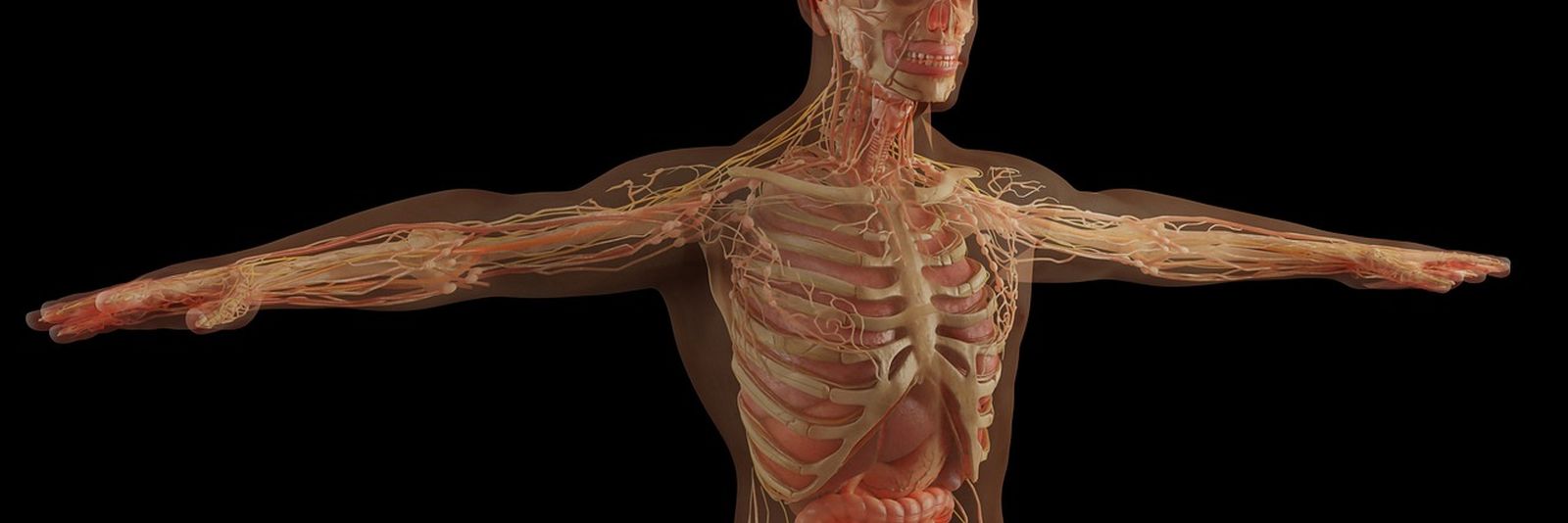
The body is organised in levels. Cells make up tissues, tissues make up organs, and organs working together make up an organ system. Each system has a clear job, and every one of them depends on the others.
The main systems
| System | Main organs | Job |
|---|---|---|
| Skeletal | bones, joints | supports the body, protects organs, makes blood cells inside bone marrow |
| Muscular | muscles, tendons | moves the body and moves material inside it |
| Digestive | mouth, stomach, small and large intestine | breaks food into nutrients the body can absorb |
| Circulatory | heart, blood, blood vessels | carries oxygen and nutrients to cells and waste away |
| Respiratory | lungs, windpipe, diaphragm | takes in oxygen and removes carbon dioxide |
| Nervous | brain, spinal cord, nerves | senses the world and controls the body |
| Excretory | kidneys, bladder | filters waste from the blood |
The path food takes
From mouth to absorption
mouth chewing and saliva begin the breakdownesophagus muscles push food down to the stomachstomach acid and churning turn it into a thick liquidsmallintestine nutrients pass through the wall into the bloodlargeintestine water is absorbed, waste is compacted
Most absorption happens in the small intestine, whose lining is folded and covered in tiny projections. Those folds give it an enormous surface area packed into a small space, which is why so much can be absorbed so quickly.
Three systems, one job
Consider what a running muscle needs. The digestive system supplies nutrients. The respiratory system supplies oxygen. The circulatory system carries both to the muscle and takes carbon dioxide away. Remove any one of the three and the muscle stops within minutes.
This is why a body systems test rarely asks what the heart does on its own. The interesting questions are about which systems have to cooperate for something to happen.
How blood travels
The heart pumps blood to the lungs, where it picks up oxygen and releases carbon dioxide. It returns to the heart and is then pumped out to the rest of the body. Arteries carry blood away from the heart, veins return it, and capillaries are the tiny vessels where the actual exchange with cells takes place.
Common mistakes
Thinking the lungs pump blood
The heart pumps. The lungs exchange gases.
Thinking most digestion happens in the stomach
The stomach starts the job. Most breaking down and nearly all absorption happens in the small intestine.
Check yourself
Which system carries oxygen to the muscles?
The circulatory system, using blood pumped by the heart.
Where does most nutrient absorption take place?
In the small intestine, whose folded lining gives a very large surface area.
Which two systems work together when you take a breath during exercise?
The respiratory system brings oxygen into the lungs, and the circulatory system carries it to the cells that need it.
What is the difference between an artery and a vein?
Arteries carry blood away from the heart, veins carry it back toward the heart.
See also
Sources
- Human organ systems as taught in United States elementary life science. Examples on this page are our own.