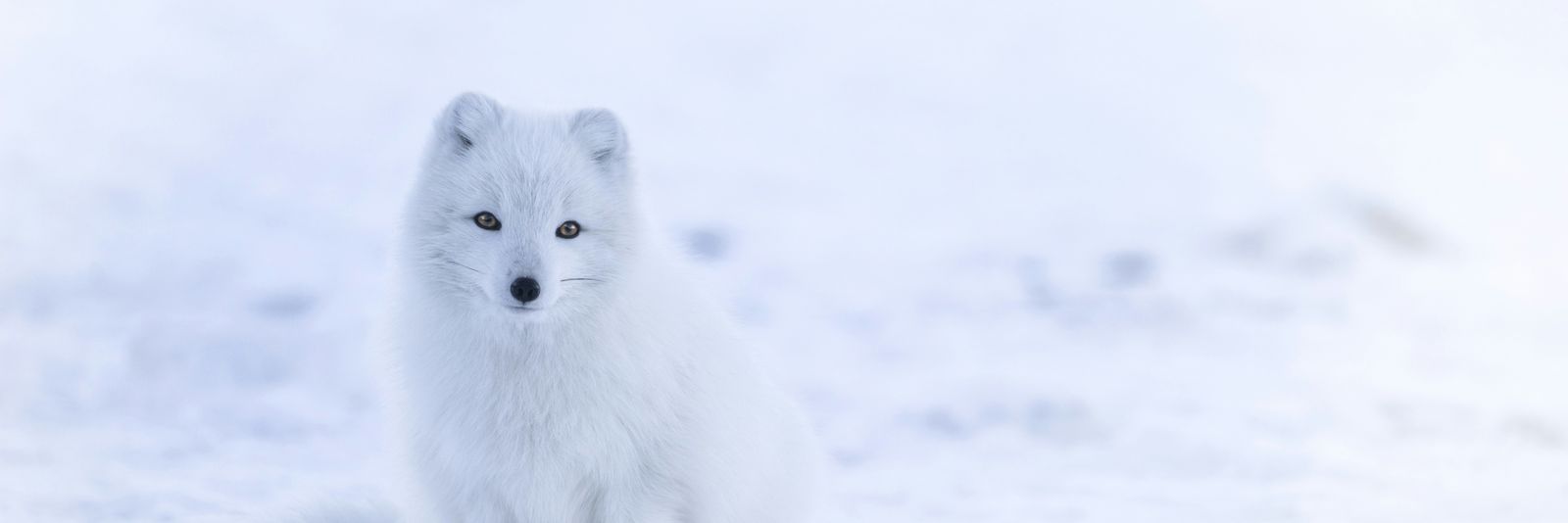
An adaptation is a feature or a behaviour that helps an animal survive and reproduce in its habitat. Adaptations are inherited from parents. An animal does not develop one because it needs it, and that distinction is the heart of this topic.
Two kinds
| Kind | What it is | Examples |
|---|---|---|
| Structural | a physical feature of the body | a polar bear's thick fat layer, a hawk's hooked beak, a cactus wren's tolerance for dry heat, webbed feet on a duck |
| Behavioural | something the animal does | migration, hibernation, hunting at night, living in a group |
Camouflage and mimicry
Camouflage is colouring or shape that helps an animal blend into its surroundings. It protects prey from being seen and also lets predators approach unnoticed. An arctic hare turning white in winter and brown in summer is camouflage that changes with the season.
Mimicry is looking like something else. Some harmless flies have the yellow and black bands of a wasp, so predators that have learned to avoid wasps avoid them too. The fly gains protection without any sting.
Surviving hard seasons
- Hibernation. A deep winter dormancy in which body temperature, heart rate and breathing all drop sharply, so the animal survives for months on stored body fat when food is scarce.
- Migration. Travelling to another region and back, usually seasonally, to reach food or a better breeding place. Many birds, whales and caribou migrate.
- Estivation. The hot weather equivalent of hibernation, used by some animals to survive drought.
Adaptations are not chosen
It is tempting to say a giraffe stretched its neck to reach high leaves and passed the longer neck on. That is not how it works. Individuals vary from birth. Those whose inherited traits suit the environment tend to survive longer and leave more offspring, so those traits become more common in later generations. The change happens across generations, not within one animal's lifetime.
Common mistakes
Saying an animal adapted because it wanted to
Adaptations are inherited traits that were already present in some individuals.
Calling any winter sleep hibernation
A bear's winter dormancy is lighter than true hibernation, and a bear can wake fairly easily. A ground squirrel in true hibernation is far harder to rouse.
Check yourself
Is a thick coat of fur structural or behavioural?
Structural. It is a physical feature of the body.
How does mimicry protect a harmless fly?
By making it look like a stinging wasp, so predators that avoid wasps leave it alone.
Why do some birds migrate?
To reach food and suitable breeding conditions that are not available in their other range at that time of year.
Why is it wrong to say a species grew longer legs because it needed to run faster?
Because traits are inherited, not produced on demand. Individuals that happened to have longer legs survived and reproduced more, so the trait spread through later generations.
See also
Sources
- Animal adaptations as taught in United States elementary life science. Examples on this page are our own.