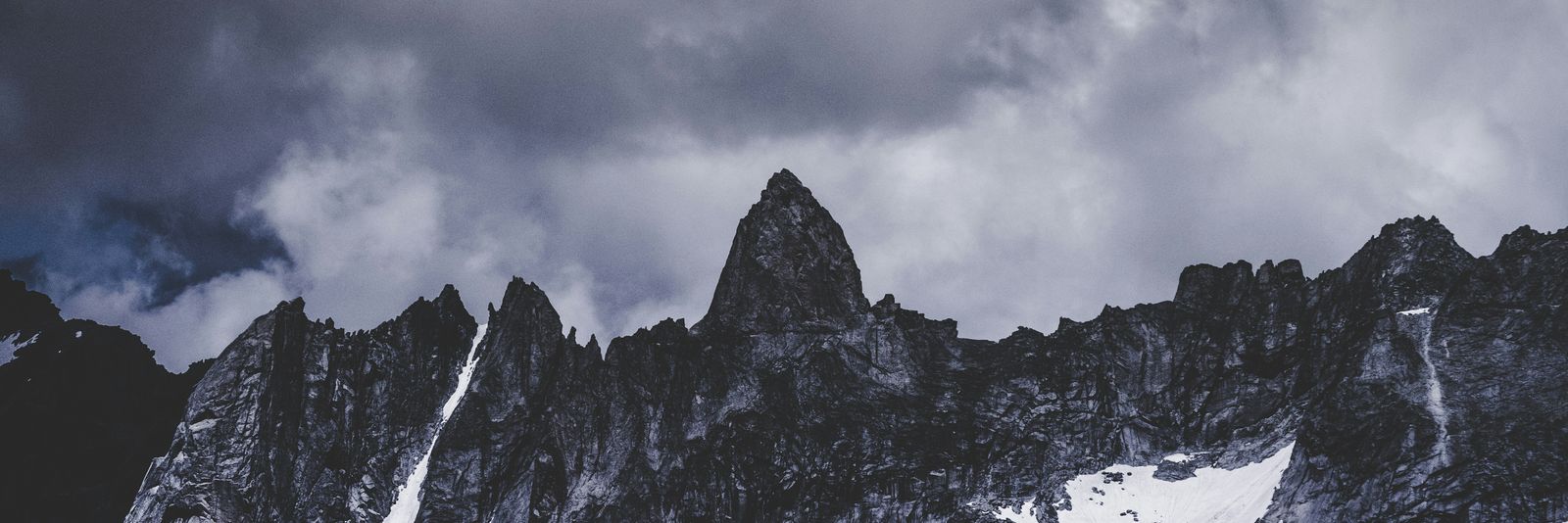
Climate is the pattern of weather a place has over many years: its typical temperatures, its rainfall, and how both change through the seasons. Weather is what happens on a given day. A single hot week says nothing about a climate, and neither does a single cold one.
What decides a climate
| Factor | Effect |
|---|---|
| Latitude | sunlight strikes the tropics almost directly and the poles at a low angle, so the tropics are far warmer |
| Altitude | air cools with height, so a mountain is colder than the lowland beside it at the same latitude |
| Distance from the sea | water heats and cools slowly, so coasts have milder summers and winters than inland places |
| Ocean currents | a warm current warms the coast it flows past, a cold current cools it |
| Mountain ranges | air rising over a range drops its rain on the windward side, leaving a dry rain shadow behind |
Climate zones
- Tropical. Hot all year, near the equator, usually with heavy rainfall in at least part of the year.
- Temperate. Between the tropics and the polar regions, with four distinct seasons and moderate rainfall.
- Polar. Cold all year, with long dark winters and short cool summers.
- Arid. Very low rainfall, often with large differences between day and night temperatures.
Why the sea moderates temperature
Water takes much more energy to warm up than land does, and it releases that energy slowly as it cools. A coastal city therefore has cooler summers and milder winters than an inland city at the same latitude, even though both receive similar sunlight. This is the same property that makes a swimming pool still feel cold in early summer when the air has already warmed.
Rain shadows
Air crossing a mountain range
1. moist air is pushed up the windward slope2. rising air cools, and cool air holds less moisture3. the moisture falls as rain on that side4. dry air descends the far side and warms result: a wet windward slope and a dry rain shadow
Common mistakes
Using one day as evidence
Climate is measured over decades. A cold day is weather.
Assuming everywhere near the equator is a rainforest
Latitude is only one factor. Altitude and rain shadows produce cold and dry places within a few degrees of the equator.
Check yourself
Two cities share a latitude, one on the coast and one far inland. Which has the colder winter?
The inland one. Without the sea nearby to release stored heat slowly, its winter temperatures fall further.
Why is a mountain top cold even in the tropics?
Because air temperature falls with altitude, so height can outweigh latitude.
What is a rain shadow?
The dry area on the far side of a mountain range, where air arrives having already dropped its moisture climbing the windward slope.
Is climate or weather being described by an average July temperature over 30 years?
Climate. It is a long-run pattern rather than a single day's conditions.
See also
Sources
- Climate controls and climate zones as taught in United States upper elementary earth science. Examples on this page are our own.