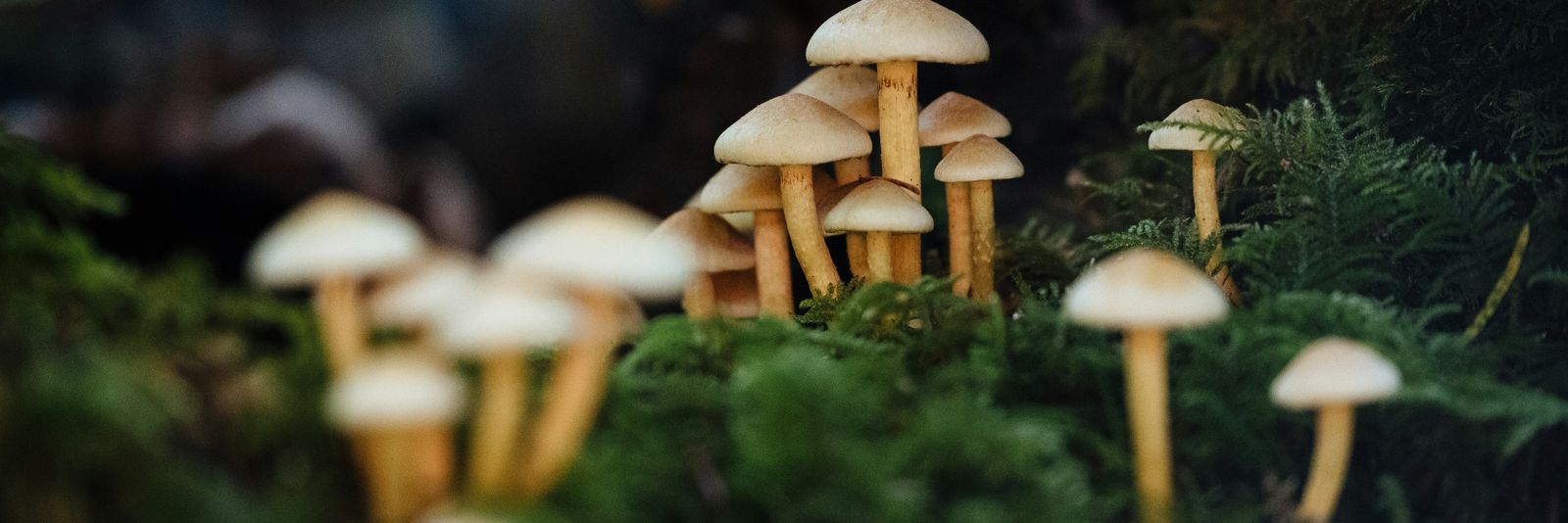
An ecosystem is all the living things in an area together with the non living parts they depend on: water, soil, air, light and temperature. Describing an ecosystem means describing both, because neither works without the other.
Three roles
| Role | How it gets energy | Examples |
|---|---|---|
| Producer | makes its own food from sunlight through photosynthesis | grass, trees, algae |
| Consumer | eats other organisms | herbivores eat plants, carnivores eat animals, omnivores eat both |
| Decomposer | breaks down dead material and waste | fungi, bacteria, earthworms |
Decomposers are the group most often left off a diagram, and an ecosystem without them would bury itself in dead material while its nutrients stayed locked up and unavailable to plants.
Habitat and niche
A habitat is where an organism lives. A niche is the role it plays there: what it eats, what eats it, when it is active, and how it affects everything around it. Two species can share a habitat and occupy different niches, which is how they avoid competing directly. A hawk and an owl may hunt the same wood, but one hunts by day and the other by night.
Symbiosis
| Type | Effect | Example |
|---|---|---|
| Mutualism | both species benefit | a bee gets nectar and the flower gets pollinated |
| Commensalism | one benefits, the other is unaffected | a bird nesting in a tree |
| Parasitism | one benefits and the other is harmed | a tick feeding on a deer |
What limits a population
Populations do not grow without end. Food, water, space, shelter and predators all act as limiting factors, and the number of individuals an area can support over the long run is its carrying capacity. A population that overshoots it falls back, usually sharply.
Common mistakes
Using habitat and niche as synonyms
Habitat is the address. Niche is the occupation.
Forgetting decomposers
Without them, nutrients never return to the soil and producers eventually run out.
Check yourself
Is a mushroom a producer, a consumer or a decomposer?
A decomposer. Fungi break down dead material rather than making their own food.
Two bird species live in the same wood without competing. How?
They occupy different niches, for instance by feeding at different times of day or on different foods.
A tick feeds on a deer. Which kind of symbiosis is that?
Parasitism. The tick benefits and the deer is harmed.
What happens when a population exceeds its carrying capacity?
Resources run short, so more individuals die or fail to reproduce, and the population falls back toward what the area can support.
See also
Sources
- Ecosystem roles, habitat and niche, and symbiosis as taught in United States upper elementary life science. Examples on this page are our own.