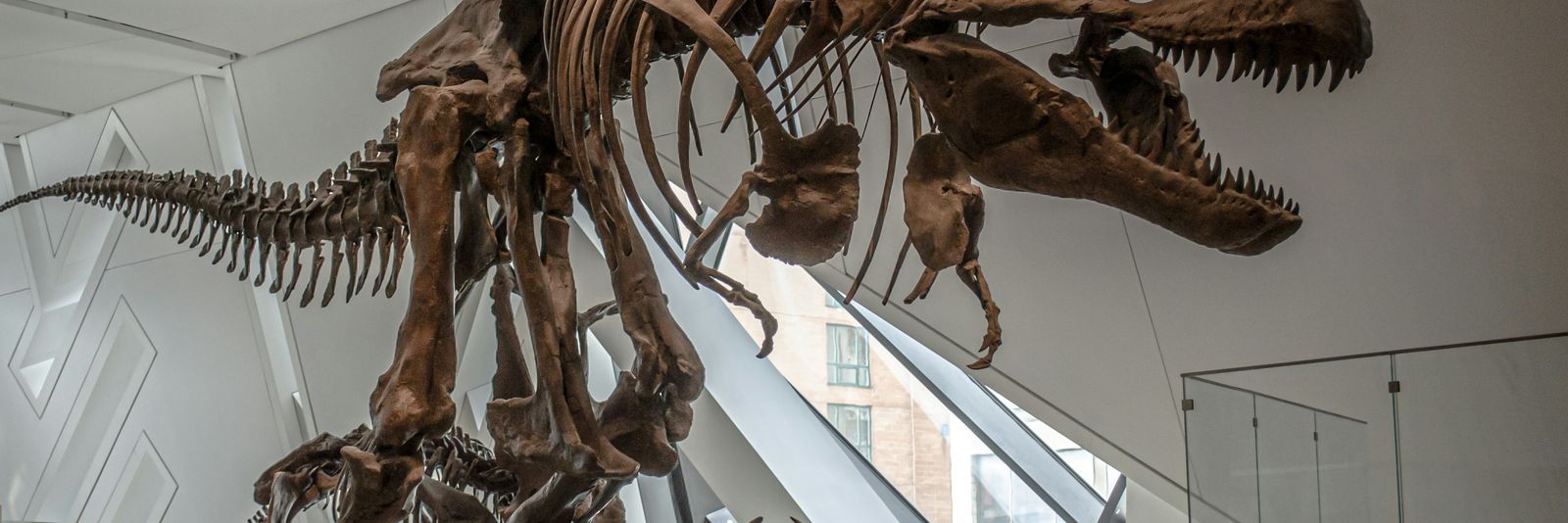
A species is extinct when no living member of it remains. It is endangered when its numbers have fallen far enough that extinction is a serious risk, and threatened when it is likely to become endangered. Extinction is permanent, which is what separates it from every other conservation problem.
Causes
| Cause | How it works | Example |
|---|---|---|
| Habitat loss | the place a species needs is cleared, drained or built over | forest cleared for farmland |
| Introduced species | a species arrives where nothing is adapted to it and outcompetes or eats the natives | rats reaching islands with ground nesting birds |
| Overhunting | a species is taken faster than it can reproduce | the passenger pigeon, hunted to extinction by 1914 |
| Pollution | chemicals damage health or reproduction | pesticides thinning bird eggshells |
| Climate change | conditions shift faster than a species can move or adapt | species restricted to mountain tops with nowhere higher to go |
Habitat loss is the largest cause by a wide margin, and it is also the least dramatic, which is why it gets less attention than hunting does.
Extinction happens naturally too
More than ninety nine percent of all species that have ever lived are extinct, and most died out long before humans existed. Five mass extinctions appear in the fossil record, the best known being the one that ended the age of the large dinosaurs about 66 million years ago. What concerns scientists now is not that extinctions occur, but how much faster they are occurring.
What fossils tell us
A fossil is the preserved remains or traces of an ancient organism, usually found in sedimentary rock. Fossils show that species have changed over time, that many kinds once existed that exist no longer, and roughly when each lived, since deeper layers are generally older. They also show which environments existed where: marine fossils in a desert mean that desert was once under water.
What conservation does
- Protecting habitat, which helps every species living in it at once.
- Laws limiting hunting and trade.
- Breeding programmes in zoos, with the aim of returning animals to the wild.
- Removing introduced predators, which has allowed several island bird species to recover.
Habitat protection does the most for the least money, which is why it is where most conservation effort goes even though captive breeding attracts more attention.
Common mistakes
Using extinct and endangered interchangeably
An endangered species still exists and can still recover. An extinct one cannot.
Assuming hunting is the main cause
Habitat loss affects far more species, though it makes fewer headlines.
Check yourself
What is the difference between endangered and extinct?
An endangered species survives in small numbers and can recover. An extinct species has no living members left.
Why are island species especially vulnerable to introduced predators?
Because they evolved without such predators and often have no defences against them, and an island offers nowhere else to go.
Marine fossils are found in a desert. What does that tell you?
That the area was covered by water when those organisms lived and were buried.
Which conservation measure helps the most species at once?
Protecting habitat, since every species living in that habitat benefits together.
See also
Sources
- Extinction, its causes, and the fossil record as taught in United States upper elementary life science. The date for the end Cretaceous extinction and the passenger pigeon are standard published figures.